A 15w wireless charger means the charging pad or stand can offer up to 15 W to a compatible phone, but the phone decides how much power it will accept. Many phones fall back to 5 W, 7.5 W or 10 W because wireless power is negotiated between the charger and the phone, and the wall adapter must also be strong enough.
Wireless charging ratings mean negotiated power
Wireless charging is not a fixed push of power from the pad into the phone. In Qi, the wireless charging standard managed by the Wireless Power Consortium, the transmitter is the charger and the receiver is the phone; they communicate and agree on the power level.
That negotiation is the reason a higher-rated charger does not force a low-power phone to charge faster. The Qi introduction explains that a 5 W receiver placed on a 15 W transmitter tells the transmitter not to send more than 5 W. It also explains the reverse: a phone that can use 15 W may charge more slowly on a 5 W transmitter.
Qi separates older low-power charging from faster charging by profile. The Baseline Power Profile is 5 W or less. The Extended Power Profile goes up to 15 W. Qi 1.0 introduced a 5 W transmitter, and Qi 1.2 added fast charging up to 15 W.
Qi2 added the Magnetic Power Profile, often shortened to MPP, which uses magnetic attachment and alignment. Better alignment matters because the charging coils in the phone and charger need to sit in the right place; when they do not, charging can slow down or stop.
Qi v2.0 launched in 2023 and brought 15 W charging with magnetic alignment. Qi v2.2.1, branded Qi2 25W, launched in July 2025; the Wireless Power Consortium says it delivers nearly 70% more charging power than original Qi2 and that Qi 2.2 added support for up to 25 W with power modes optimized to USB-C power adapters.
A charger label is only the charger’s capability. The real speed depends on the phone, alignment, case, cable, wall adapter and temperature control.
W, 7.5 W, 10 W, 15 W and 25 W in one view
Use the watt number as a compatibility ceiling, not a promise. The phone, charger and adapter all need to support the same charging route before you see the higher rate.
| Rating | Typical meaning | Adapter guidance |
|---|---|---|
| 5 W | Qi baseline | 7.5 W+ input for 5 W load |
| 7.5 W | iPhone limit in some conditions | Follow charger maker |
| 10 W | Mid-power product mode | Confirm input profile |
| 15 W | Qi EPP or Qi2 level | 20 W+ supply for EPP |
| 25 W | Qi2 25W class | USB-C optimized modes |
The 5 W row has a clear Qi reference point: the Wireless Power Consortium’s power-delivery document gives an example where 5 W load power translates to 7.5 W or more input power. For 15 W Extended Power Profile transmitters, the same document says the power supply should provide at least 20 W, and its example says 15 W load power translates to 20 W or more input power.
The 7.5 W number is important for iPhone users because Apple says connecting USB-C or Lightning accessories while wirelessly charging can limit iPhone charging to 7.5 W. Apple also warns that a wireless charger below 10 W, such as a Qi1-certified charger, can make charging take longer.
The 10 W number is often used on product pages and packaging, but the safer sourcing question is not “Does it say 10 W?” It is “Which phones, which input voltage, which cable and which test condition produce the advertised mode?” Because Qi power is negotiated, a phone that only requests 5 W will not draw 10 W simply because the pad can offer it.
The 25 W number is newer and narrower. Qi 2.2 added support for up to 25 W, and Qi2 25W was announced in 2025 with certification testing for devices, receivers and transmitters. It does not mean every older phone becomes a 25 W wireless phone.
Phone compatibility by platform
For iPhone, Apple’s guidance is direct: faster wireless charging requires a MagSafe Charger or a Qi2-certified wireless charger. Apple says iPhone 17e and iPhone 15 and earlier can use MagSafe charging up to 15 W when paired with a 20 W or greater USB-C power adapter rated 9 V/2.22 A or 9 V/2.56 A or higher.
Apple also notes exceptions inside the iPhone range. iPhone 13 mini and iPhone 12 mini peak at up to 12 W with MagSafe. Apple says newer listed iPhones can reach higher MagSafe peak power with a 30 W or greater adapter rated 15 V/2.0 A or higher.
For Samsung Galaxy buyers, Samsung says Galaxy phones since the Galaxy S8 and Note8 are compatible with Qi-certified wireless chargers. For fast wireless charging on Galaxy devices, Samsung says to use Qi2-certified covers and MPP wireless chargers for magnetic alignment and fast charging up to 15 W. Samsung also says fast wireless charging is enabled only on devices certified by Samsung and the Wireless Power Consortium.
Samsung’s wall-adapter wording is also worth reading carefully. It advises using the AC adapter and USB cable supplied with the wireless charger. On another support page, Samsung lists a 9 W wireless pad and a 15 W wireless charger compatible with Super Fast Charging travel adapters.
For Google Pixel and other Android phones, do not assume from the charger label alone. Check the phone maker’s wireless charging specification, then match it to the charger profile and adapter requirement. If the phone supports only a lower wireless level, a 15 W pad will behave like a lower-power charger for that phone.
Wall adapters and cables decide whether 15 W is possible
The wall adapter supplies power to the wireless charger. Wireless charging has conversion loss, so a 15 W output target needs more than 15 W at the input. That is why the Wireless Power Consortium says Extended Power Profile transmitters should use a power supply of at least 20 W.
For iPhone at up to 15 W with MagSafe, Apple specifies a 20 W or greater USB-C adapter with 9 V/2.22 A or 9 V/2.56 A or higher for iPhone 17e and iPhone 15 and earlier. For newer listed iPhones that can reach higher MagSafe peak power, Apple says to use a 30 W or greater adapter rated 15 V/2.0 A or higher.
For Samsung, do not mix wired and wireless terms loosely. Samsung says 25 W Super Fast Charging uses a 25 W USB-C adapter and, for best wired results, recommends a 5 A-rated USB-C cable because a 3 A cable may limit speed. For wireless charging, Samsung’s practical instruction is to use the adapter and USB cable supplied with the wireless charger.
When a charger is plugged into an old USB-A adapter or a weak USB-C adapter, several things can happen. It may charge at a lower mode, fail to enter fast wireless charging, run warmer, or stop and restart. The exact behavior depends on the charger design and the phone’s negotiation.
For a buying or sourcing check, ask the supplier to state:
- The required input connector and adapter profile for each wireless mode.
- Whether the cable is included, and whether the advertised mode was tested with that cable.
- Which phones were used for verification, separated by iPhone and Android.
- Whether the charger steps down power when temperature rises.
- Whether the product has a clear warning for metal objects between phone and charger.
Design choices for buyers sourcing chargers
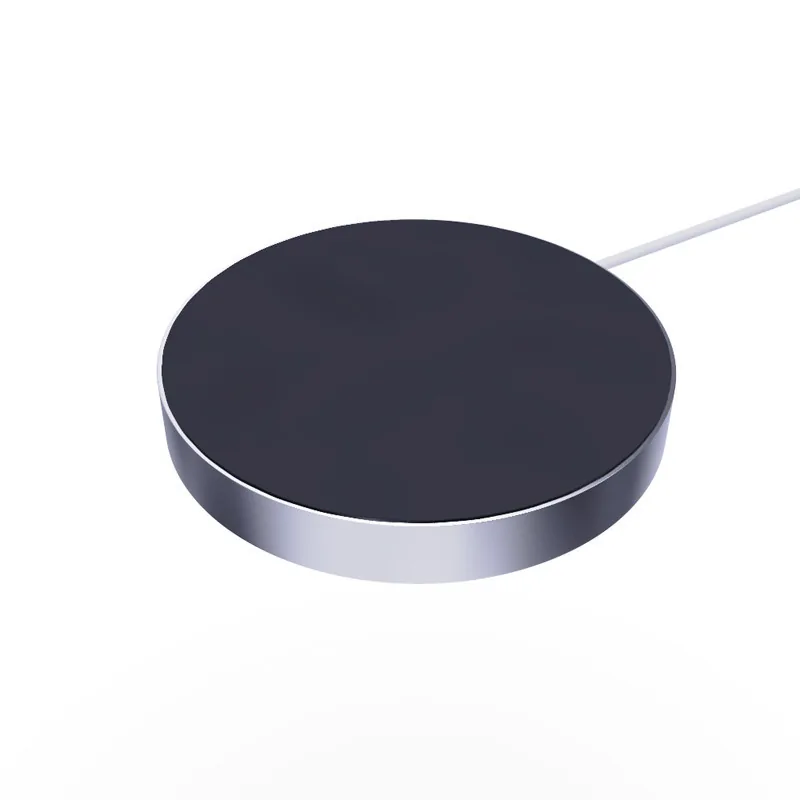
A flat pad is simple, compact and easy to pack. It suits promotional gifts and desktop use, but the user must place the phone correctly. If the coil position is not obvious, buyers should ask for alignment markings, an indicator light or a magnetic version.
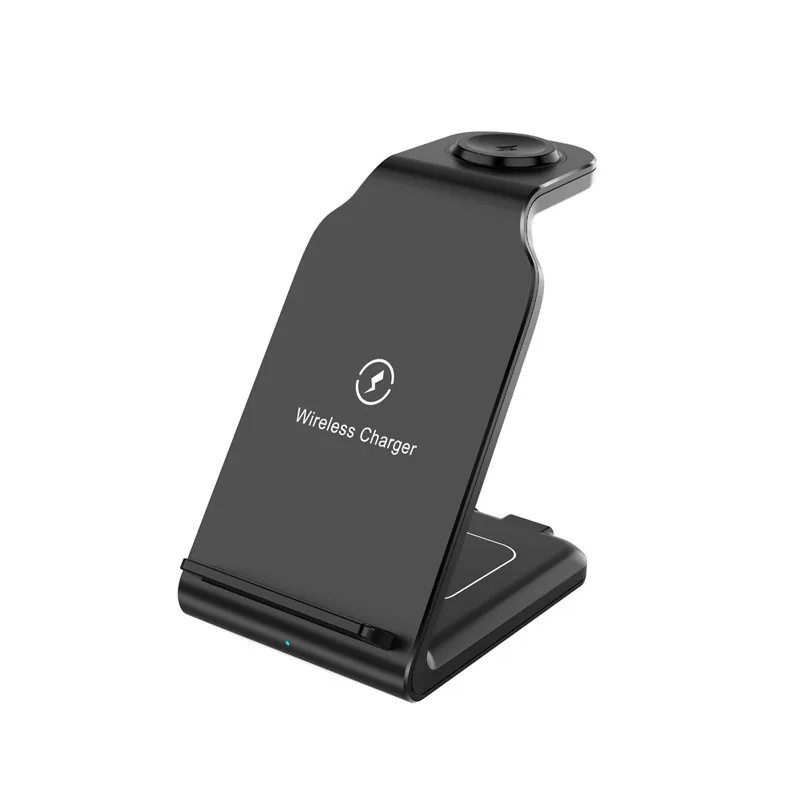
A stand is more convenient for desks and bedside tables because the phone remains visible. The key checks are whether the phone charges in portrait and landscape positions, whether the base is stable, and whether the coil position suits both small and large phones.
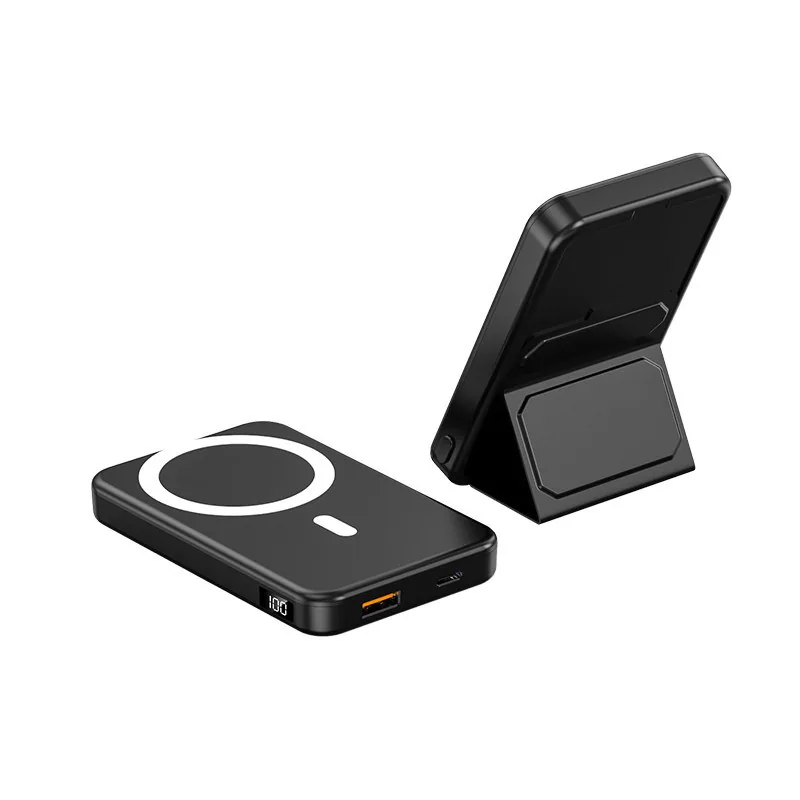
A magnetic charger improves placement for phones and cases that support magnetic alignment. For iPhone-focused ranges, Qi2 and MagSafe-related compatibility language must be handled carefully: MagSafe is Apple’s trademark, while Qi and Qi2 belong to the Wireless Power Consortium. Use these names to describe compatibility with standards and phone features, not as a claim that every product is made or approved by those organisations.
A car mount charger adds vibration, heat and viewing-angle questions. Ask how the phone is held, how the cable exits, and whether the mount keeps the charging area aligned during driving. Car use can expose the product to more heat than a desk, so thermal step-down behavior matters.
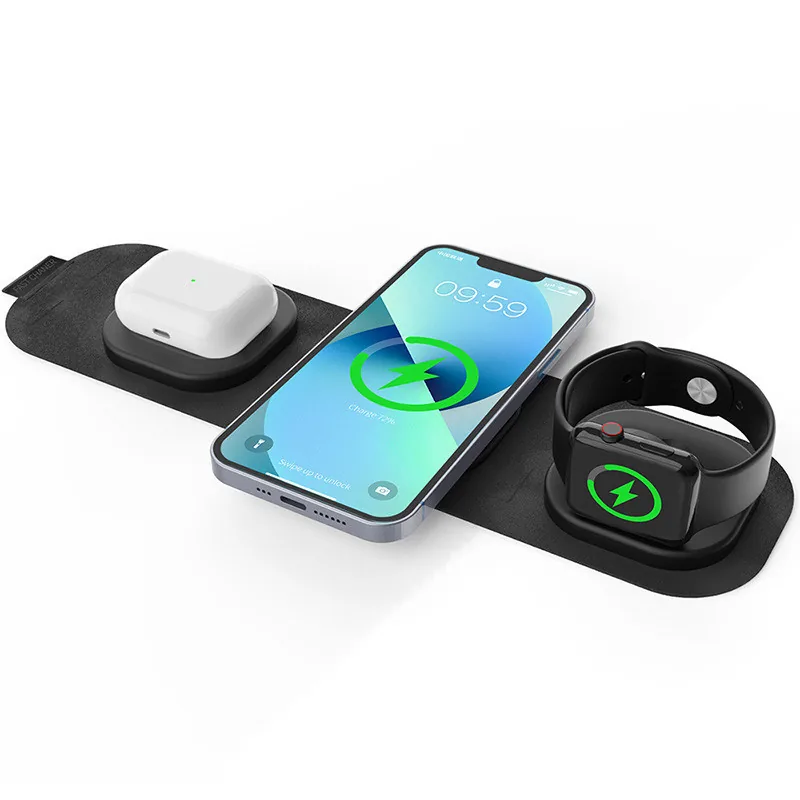
A multi-device desktop station adds convenience but also adds power budgeting. A phone pad, watch area and earbud area do not all behave like one simple 15 W phone charger. Ask for a power allocation chart for each device area and a test report showing what happens when all positions are occupied.
For a buyer comparing physical formats, Sunntc’s wireless charger categories can be a useful reference point: wireless chargers, magnetic wireless chargers and charging stations are different sourcing decisions, not just different shapes.
OEM and ODM approval checklist
For brand owners, importers, distributors and promotional-gift buyers, the important work starts before a sample is approved. A product that looks similar in photos can differ in coil position, input requirement, heat behavior, logo durability and packaging clarity.
For a custom project, separate the design decision from the branding decision. OEM means making a product to the buyer’s design; ODM means adapting an existing design route. Shenzhen Sunning Tension Industrial Co., Ltd. manufactures wireless chargers, USB cables and wireless charging power banks to order for brands, importers, distributors and promotional-gift buyers, with custom logos and packaging. The company does not sell its own consumer brand.
Before approving a 15 W wireless charging item, check:
- The exact wireless profile claimed: Qi baseline, Qi Extended Power Profile, Qi2 MPP or Qi2 25W.
- The phone list used in testing, with the actual mode reached on each phone.
- The required wall adapter and cable for each advertised output.
- Alignment performance with and without a normal protective case.
- Heat behavior during a full charging session, including step-down conditions.
- Foreign object response when a metal object is placed between phone and charger.
- Input and output verification records for the approved sample.
- Aging-test method, inspection points and packaging drop or handling checks.
- Logo method, colour matching, surface finish and position tolerance.
- Packaging wording, user manual warnings and market compliance documents.
If branding is part of the order, review how the mark will look on the real surface, not only on a flat artwork file. Gloss plastic, fabric, leather-like surfaces and metal finishes can make the same logo appear different. A digital preview is useful before sample approval; buyers can try a logo direction with the logo customiser.
For compliance, ask for documents that match the destination market and the exact approved model. Do not accept paperwork for a different housing, cable, adapter bundle or circuit layout without checking whether the change affects the claim. For broader inspection expectations, review the quality page before requesting samples or a quotation through contact.
Questions and answers
Is a 15w wireless charger actually faster than a 10 W charger for my phone?
Only if your phone supports a higher wireless mode and the charger, cable and wall adapter can supply it. Qi power is negotiated, so a phone that requests only 5 W will not draw 15 W from a higher-rated pad.
Why does my iPhone only charge at 7.5 W on some wireless chargers?
Apple says faster wireless charging on iPhone requires a MagSafe Charger or a Qi2-certified wireless charger, and it warns that chargers below 10 W can take longer. Apple also says connecting USB-C or Lightning accessories while wirelessly charging can limit iPhone charging to 7.5 W.
Which phones can really use 15 W wireless charging?
Apple says iPhone 17e and iPhone 15 and earlier can use MagSafe up to 15 W with the specified 20 W or greater USB-C adapter, while iPhone 13 mini and iPhone 12 mini peak at up to 12 W. Samsung says fast wireless charging on Galaxy devices should use Qi2-certified covers and MPP wireless chargers for magnetic alignment and fast charging up to 15 W, and that the device must be certified by Samsung and the Wireless Power Consortium.
Do I need a 15 W, 20 W, 25 W or 30 W wall adapter?
For Qi Extended Power Profile at 15 W, the Wireless Power Consortium says the power supply should provide at least 20 W. Apple specifies 20 W or greater for MagSafe up to 15 W on the stated iPhones, and 30 W or greater for newer listed iPhones that can reach higher MagSafe peak power.
Does a 25 W wireless charger charge every phone at 25 W?
No. Qi 2.2 added support for up to 25 W and Qi2 25W launched in 2025, but the phone and charger still negotiate power. Older phones or phones without the matching receiver support will charge at a lower level.
What happens with an old adapter or weak cable?
The charger may fall back to a lower mode, fail to start fast wireless charging, or run warmer before reducing power. For Samsung wireless charging, Samsung advises using the AC adapter and USB cable supplied with the wireless charger; for iPhone, Apple gives specific USB-C adapter ratings for higher wireless charging.
Sources
- Wireless Power Consortium: Qi Specification, Introduction, Version 1.3
- Wireless Power Consortium: Qi Specification, Power Delivery, Version 1.3
- Wireless Power Consortium: History of the Qi Specifications
- Wireless Power Consortium: Qi: Mobile charging empowered
- Wireless Power Consortium: WPC Ushers in Next Generation of Faster Wireless Charging
- Apple: About iPhone charge speeds
- Apple: How to use your MagSafe Charger with iPhone
- Samsung: Samsung Galaxy phone will not charge wirelessly
- Samsung: Choosing and using the right charger for your Galaxy phone
- Samsung: Samsung Galaxy device is not fast charging
Written by the engineering team at Shenzhen Sunning Tension Industrial Co., Ltd., an OEM and ODM factory in Bao’an, Shenzhen making consumer electronics and supplying custom-branded gifts. Ask a question about your own specification →