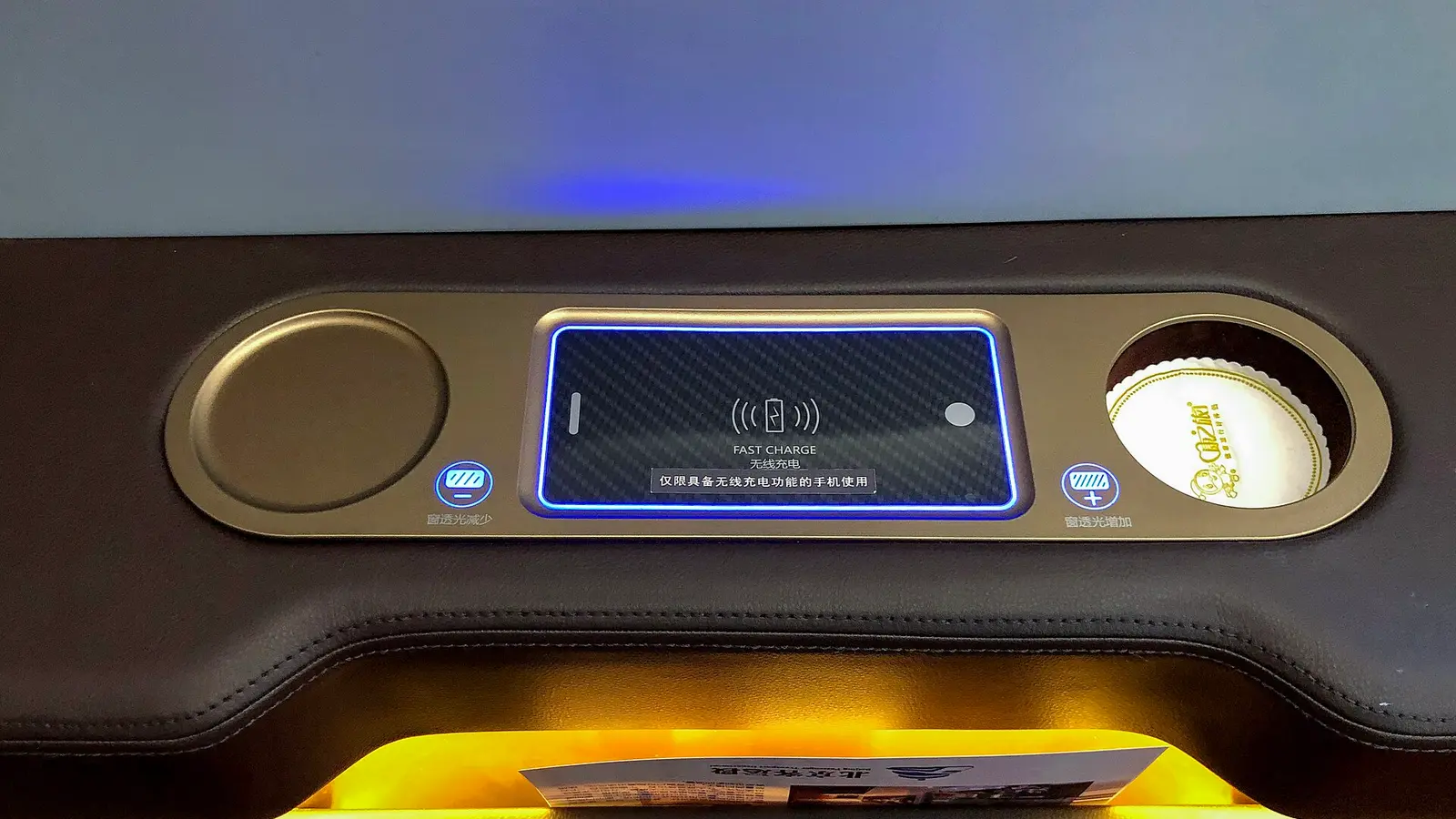
The fast answer for buyers
A custom wireless charger is usually an existing charging pad, stand, station or power bank adapted with your logo, colour and packaging, or a deeper OEM or ODM project with design changes. It suits brand owners, importers, distributors and promotional-gift buyers who want a product sold or given under their own name, but the safe route is to define the market, charging standard, artwork and approval tests before production starts.
The practical choice is between private label, OEM and ODM. Private label means cosmetic changes to an existing product, such as logo and box. OEM means a product made to your design or specification. ODM means the supplier helps develop a product concept or modified design for your brand. For many orders, private label is the lowest-risk starting point because the changes are mostly cosmetic; for a real design change, plan for extra checking of safety, labelling and market compliance.
Do not treat branding as decoration only. A wireless charger is electrical equipment, and your logo, model name, retail box, user manual and compliance labels all need to match the market where you will sell it.
Custom wireless charger branding choices
Most buyers start with the visible surfaces: top logo, shell colour and retail packaging. The top surface can often carry a logo, but the method depends on the material, finish and whether the charging area must remain smooth for phone contact. A raised badge may look premium but can interfere with placement; a flat print or engraving is usually safer for the charging surface.
Common logo methods are:
- Silk screen printing: a practical choice for simple one-colour logos on flat plastic, metal or coated surfaces. It is clean and economical in appearance, but the surface finish and ink adhesion should be checked on a real sample.
- UV printing: useful for multi-colour artwork, gradients and promotional designs. It gives more graphic freedom than simple screen printing, but edge sharpness and scratch resistance should be approved on the final material.
- Laser engraving: often preferred for metal or coated parts where a subtle, durable mark is wanted. It marks the surface instead of adding a colour layer, so it can feel more permanent, but colour options are limited by the material.
- Debossing or embossing: suitable for some leather-like or soft-touch surfaces. It can look refined, but it is not ideal for every flat charging zone.
Shell colour can usually be discussed as a brand colour target, but approve it with a physical colour sample, not only a screen image. Plastic, coating, silicone, leather-like finishes and metal can reflect colour differently. If colour matching matters, send a colour reference, surface finish requirement and any unacceptable colour shift.
Packaging can also be customised. Buyers commonly change the retail box artwork, manual, insert card, barcode label, carton mark and warning text. The box should support your sales channel: retail shelf, e-commerce shipping, corporate gift set or distributor carton. The manual should match the actual product functions and the market language.
You can explore product formats in wireless chargers before deciding where the logo and packaging message will work best.
Product format affects branding space
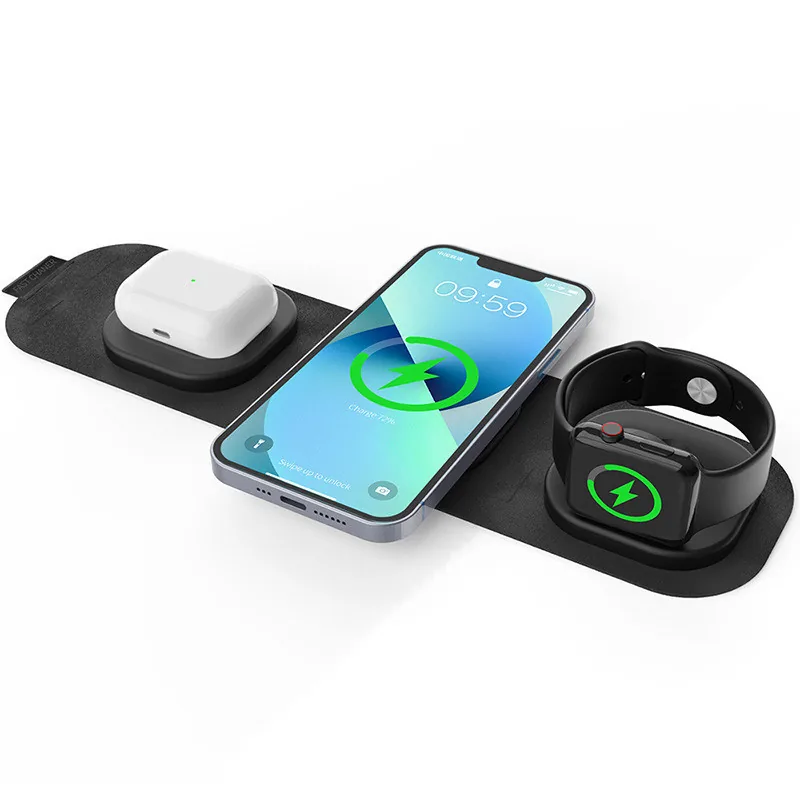
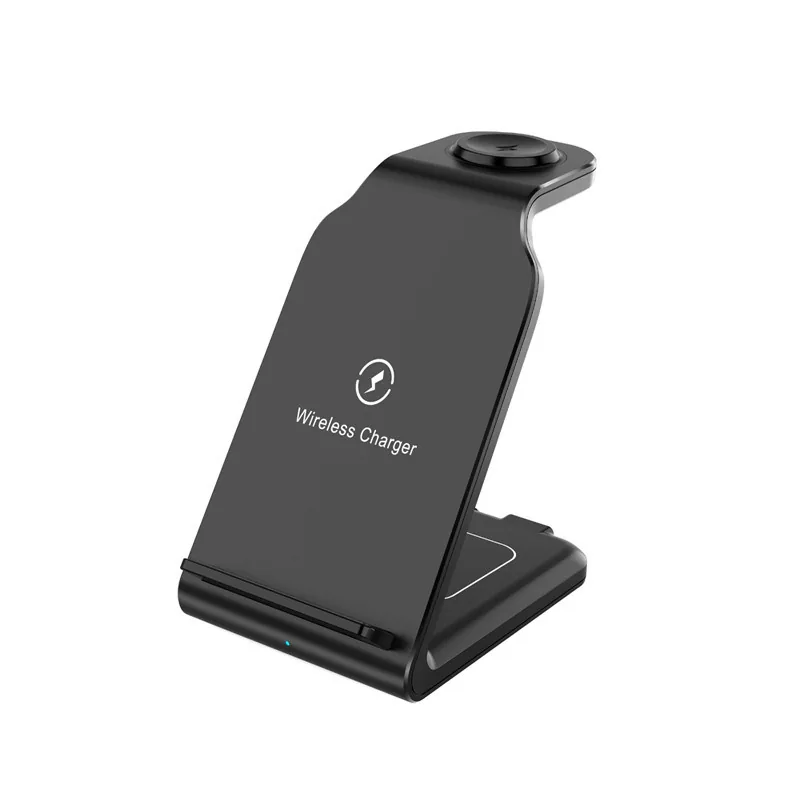
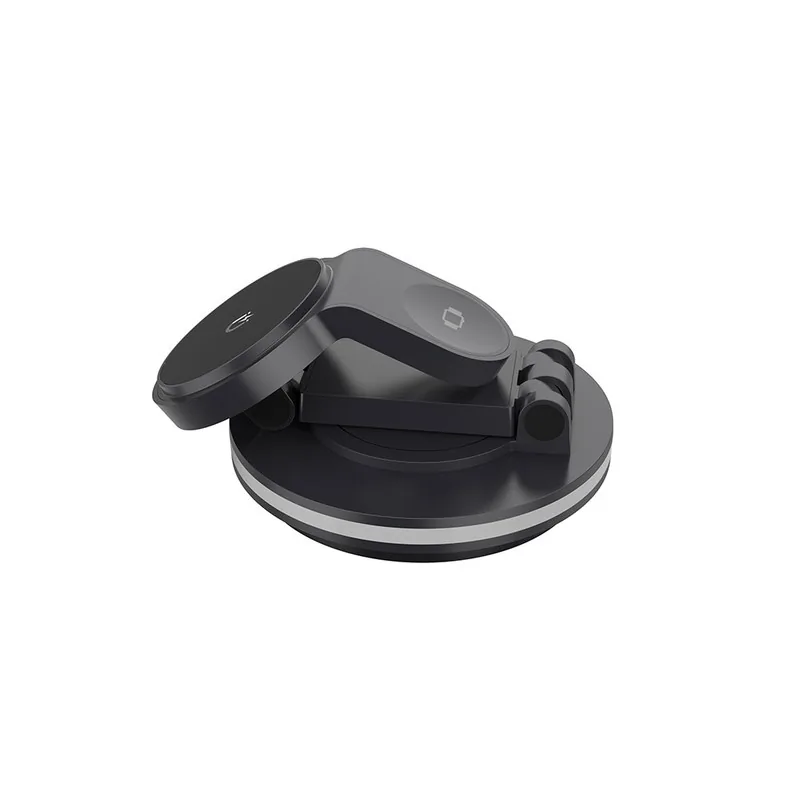
A flat pad gives a large visible logo area, while a stand gives better daily use on a desk but less uninterrupted branding space. Multi-device stations add value for users with a phone and accessories, but they also add more surfaces, more instructions and more checks during approval.
| Format | Branding fit | Watch points |
|---|---|---|
| Charging pad | Large top logo | Phone alignment |
| Stand | Front logo | Viewing angle |
| 2-in-1 or 3-in-1 | Gift sets | More functions |
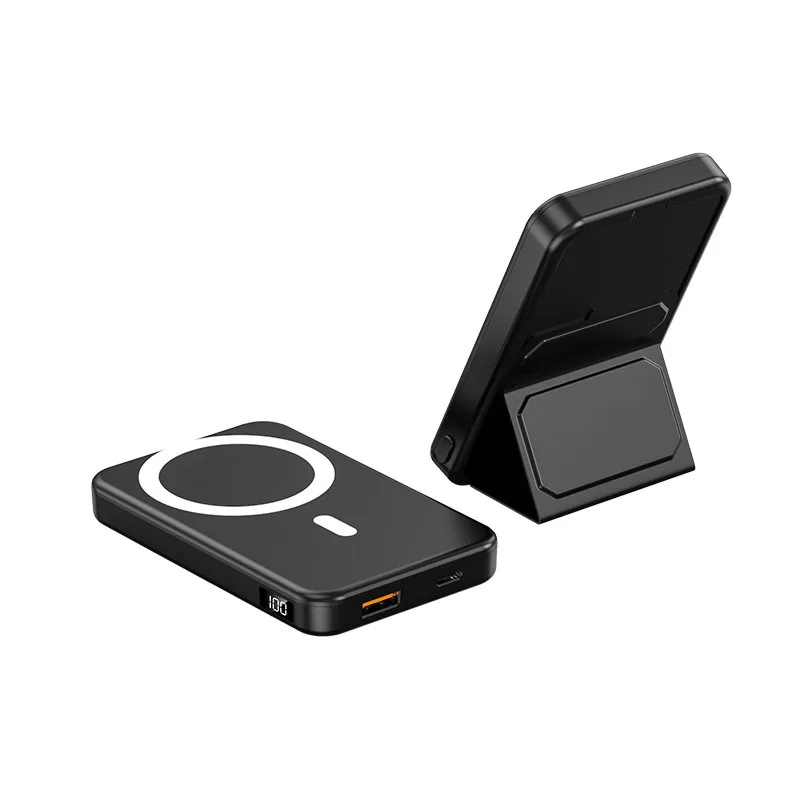
| Magnetic charger | Compact logo | Alignment strength |
| Power bank | Travel branding | Battery labelling |
| Mouse pad charger | Large print area | Charging zone clarity |
For iPhone users, Apple says iPhone 8 or later works with Qi-certified chargers, and many Qi-certified chargers charge iPhone at up to 7.5 W. Apple also says the phone should be placed in the centre of the charger or in the location recommended by the maker, and that thick, metal or battery cases can slow or prevent charging. This matters for branding because a large logo should not make the charging spot unclear.
Magnetic chargers need extra attention. The buyer should define the target phone group, case type and alignment expectation. If you refer to Apple’s MagSafe, use it only in the correct context as Apple’s trademark; do not use it as a loose replacement for magnetic wireless charging.
For a more detailed standard comparison, see MagSafe vs Qi2 vs Qi: What to Specify in 2026.
Standards and trademarks on products and boxes
The words Qi and Qi2 are not generic decoration. The Wireless Power Consortium says the Qi name and logo are registered trademarks. It also says use of the Qi name or logo on products, packaging or marketing materials requires a trademark licence, and that the licence is granted only for products visible in the Qi Certified Product Database. The WPC says the brand name, type number and picture must be an exact match.
Do not put Qi, Qi2 or a certified USB logo on your charger, box, manual or online listing unless your exact branded product is eligible to use that mark.
The WPC Product Database says products certified to meet the Qi standard for safety and interoperability receive a certified ID number and are included in the database. It also says checking the database is the best way to confirm certification. If a supplier says an existing model is listed, check whether your final brand name, type number and picture will still match the database entry before printing retail packaging.
The WPC logo rules are also specific. When the Qi logo is used, the WPC says it must follow display rules, including a clear zone equal to the logo width. The logo must be shown in black, white, or the same colour as surrounding text or graphics. The WPC also lists separate artwork for Qi, Qi2, Qi2 25W, Qi2 Ready and Qi2 Ready 25W, so do not swap one mark for another.
USB logos have similar restrictions. USB-IF says certified USB logos are trademark-protected and may be used only with products that passed USB-IF compliance testing and are currently on the Integrators List, with a USB Vendor ID requirement. USB-IF also says a signed logo licence is required before a company can access logo artwork and use the logos for products that pass compliance testing.
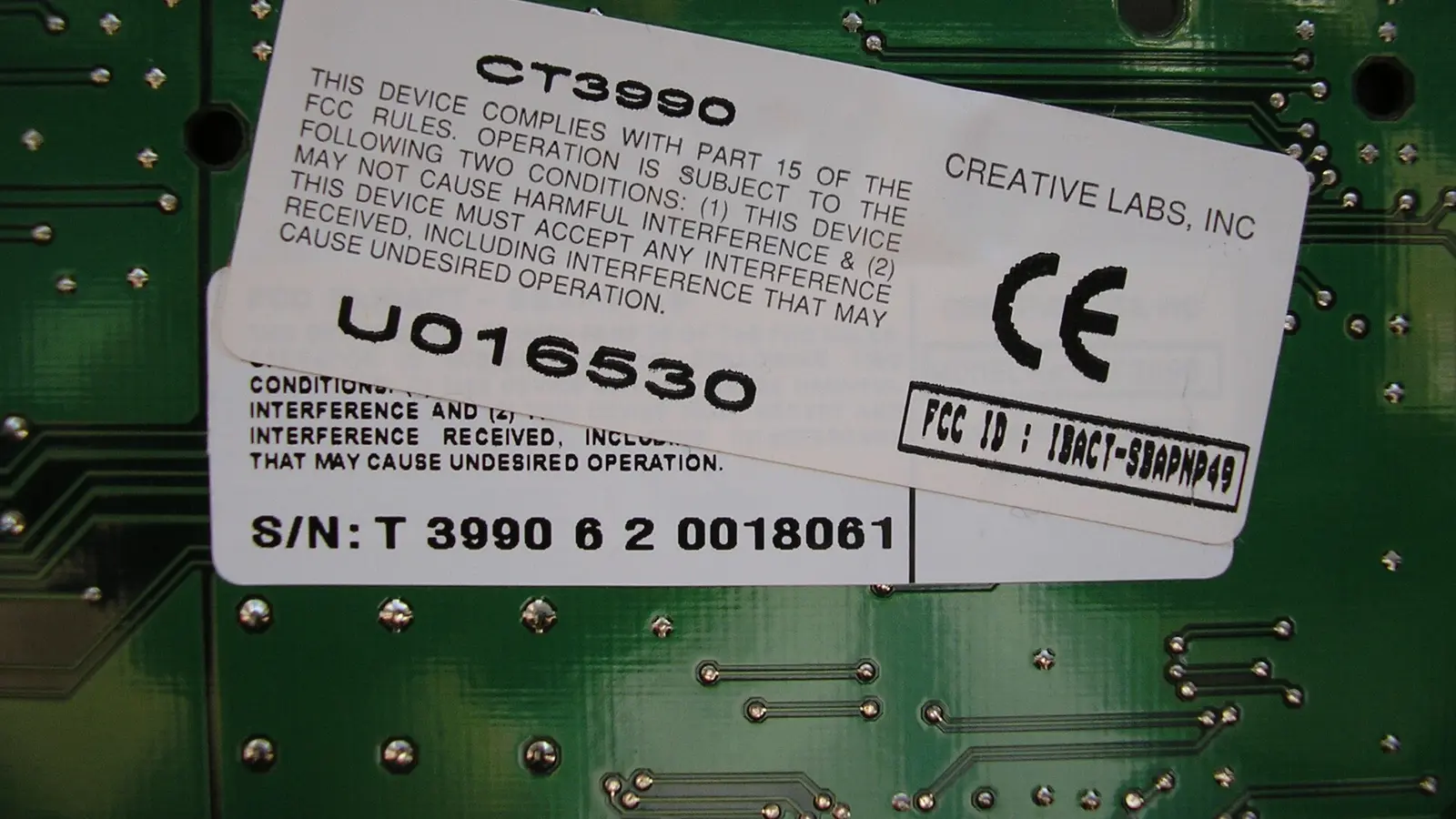
Market labelling also matters. For the EU, the Your Europe page says CE marking is required for products covered by harmonised EU rules, including electrical and electronic equipment. It says a company is considered the manufacturer if it has a product made for it and sells it under its own name or brand. The CE mark must be visible, legible and indelible, normally at least 5 mm high, and technical documentation and the Declaration of Conformity must be kept up to date and retained for at least 10 years after placing the product on the market.
For the U.S. market, FCC identification rules say the identification must be on a permanently affixed nameplate or label and readily visible to the purchaser at purchase. The rule gives examples such as etched, engraved, stamped or indelibly printed data, or a permanent nameplate, and says the FCC ID must be readily legible. For very small devices, the FCC ID may go in the manual and also on packaging or a removable device label. FCC rules also say a new certification application is needed whenever the FCC Identifier changes, whether or not the design, circuitry or construction changes; a change in model or type number or trade name under the relevant rule is not considered a change in identification.
Samples and approval before production
A sample is not only for appearance. It is your chance to confirm charging behaviour, logo durability, packaging fit, instructions, labels and the user experience that your customer will receive.
Use a staged approval process:
- Artwork proof: check logo size, position, colour, box layout, manual text, barcode position and carton marks before anything is made.
- Appearance sample: confirm shell colour, surface finish, logo method and retail packaging materials.
- Functional sample: test charging start, charging stability, LED behaviour, heat feel, cable fit and adapter compatibility.
- Golden sample: keep one approved sample as the reference for later inspection. It should represent the final logo, colour, packaging and label content.
- Lab or database check: where certification claims are used, check the relevant database or ask whether a sample verification route is suitable.
The Wireless Power Consortium says some brand owners have wireless chargers made by OEM or ODM suppliers, and its sample verification service lets them check that received products are safe and not modified. It says an Authorized Test Lab can verify whether samples correctly implement key Qi safety features, but that this is not a complete compliance test and is not free.
Your own approval checks should be practical and repeatable:
- Test with the phone models your customers are most likely to use.
- Include at least one phone case that reflects real customer use, especially thick, metal or battery cases.
- Place the phone in the centre or the recommended charging location and check whether branding makes alignment confusing.
- Check charging start and restart after lifting and replacing the phone.
- Touch-check surface temperature during normal use and after a longer charging period.
- For magnetic products, check alignment and pull feel with the intended phone and case combination.
- Rub the logo by hand and check for visible damage, colour transfer or peeling.
- Pack and unpack the retail box to confirm fit, insert strength and manual placement.
- Review the outer carton mark against your warehouse and distributor requirements.
For formal inspection planning and certificates discussion, use quality and inspection as a checklist starting point.
What to send with an enquiry
A clear RFQ, or request for quotation, reduces back-and-forth and helps the factory judge whether you need private label, OEM or ODM support. If you are comparing suppliers, send the same pack to each one so the replies are comparable.
Copy this checklist into your enquiry:
- Target market or countries of sale.
- Sales channel: retail, online, distributor, corporate gift or bundle.
- Product format: pad, stand, station, magnetic charger, car mount, mouse pad charger or power bank.
- Target phone and accessory compatibility.
- Required charging standard claim, such as Qi or Qi2, if needed.
- Whether you need the exact branded product to be listed in the relevant product database.
- Input port preference and whether a cable or adapter is included.
- Logo file in vector format, plus colour reference and logo placement idea.
- Preferred logo method: silk screen, UV print, laser engraving, debossing or open to advice.
- Shell colour, surface finish and material preference.
- Retail box artwork needs, manual language, barcode label and insert card.
- Compliance marks and documents required for your market.
- Order quantity for quotation purposes, without assuming it is the only possible quantity.
- Target buying price if you have one, stated as a planning target rather than a claim.
- Required delivery date or launch date, if it is fixed.
- Sample quantity needed and who will approve the golden sample.
If you are unsure whether your change is cosmetic or structural, ask the supplier to separate the quotation into existing-model branding and design-change options. A colour, logo and box change is usually a private-label project. Changing the charging layout, enclosure structure, electronics, heat path or user interface is a real product change and needs deeper review.
For the next step, you can ask for a quotation or sample through contact.
Questions and answers
Can the top surface carry my logo?
Yes, if the surface material and charging area allow it. Keep the mark flat, avoid making the phone unstable, and make sure the logo does not hide the correct placement area. Approve the method on a real sample, not only on a digital mock-up.
Which logo method lasts longest?
Laser engraving is often the strongest choice where the material supports it because it marks the surface rather than adding an ink layer. For plastic or coated surfaces, silk screen and UV printing can work well, but the final decision should be based on a rub check and the approved golden sample.
Can the shell match my brand colour?
Yes, but colour should be approved physically. Send a colour reference and state the finish you expect, such as matte, glossy or soft-touch. The same colour can look different on plastic, coating, silicone, metal or leather-like surfaces.
Can I change the box, manual and barcode label?
Yes. The retail box, manual, insert card, barcode label and carton mark are common private-label items. Make sure the manual, warning text, compliance marks and product name match the exact product you will sell.
If an existing charger has Qi status, can I print Qi or Qi2 on my branded box?
Only if your exact branded product is eligible under WPC trademark rules. The WPC says Qi name and logo use requires a trademark licence, and the licensed product must be visible in the Qi Certified Product Database with exact matching brand name, type number and picture.
What should I test before approving the final sample?
Test charging start, charging stability, phone alignment, surface temperature, case compatibility, cable fit, adapter compatibility, logo durability, packaging fit and label accuracy. For iPhone users, remember Apple says thick, metal or battery cases can slow or prevent wireless charging.
Sources
- Wireless Power Consortium: Qi logo guidelines and artwork
- Wireless Power Consortium: Trademark Licenses
- Wireless Power Consortium: Qi Product Database
- Wireless Power Consortium: Sample Verification Service
- U.S. Government Publishing Office / Federal Communications Commission: 47 CFR § 2.933 Change in identification of equipment
- U.S. Government Publishing Office / Federal Communications Commission: 47 CFR § 2.925 Identification of equipment
- U.S. Government Publishing Office / Federal Communications Commission: 47 CFR Part 18 Industrial, Scientific, and Medical Equipment
- European Union / Your Europe: CE marking – obtaining the certificate, EU requirements
- USB Implementers Forum: USB-IF Logo Trademark License Agreement and Usage Guidelines
- Apple: How to wirelessly charge your iPhone
Written by the engineering team at Shenzhen Sunning Tension Industrial Co., Ltd, an OEM and ODM factory in Bao’an, Shenzhen making consumer electronics and supplying custom-branded gifts. Ask a question about your own specification →