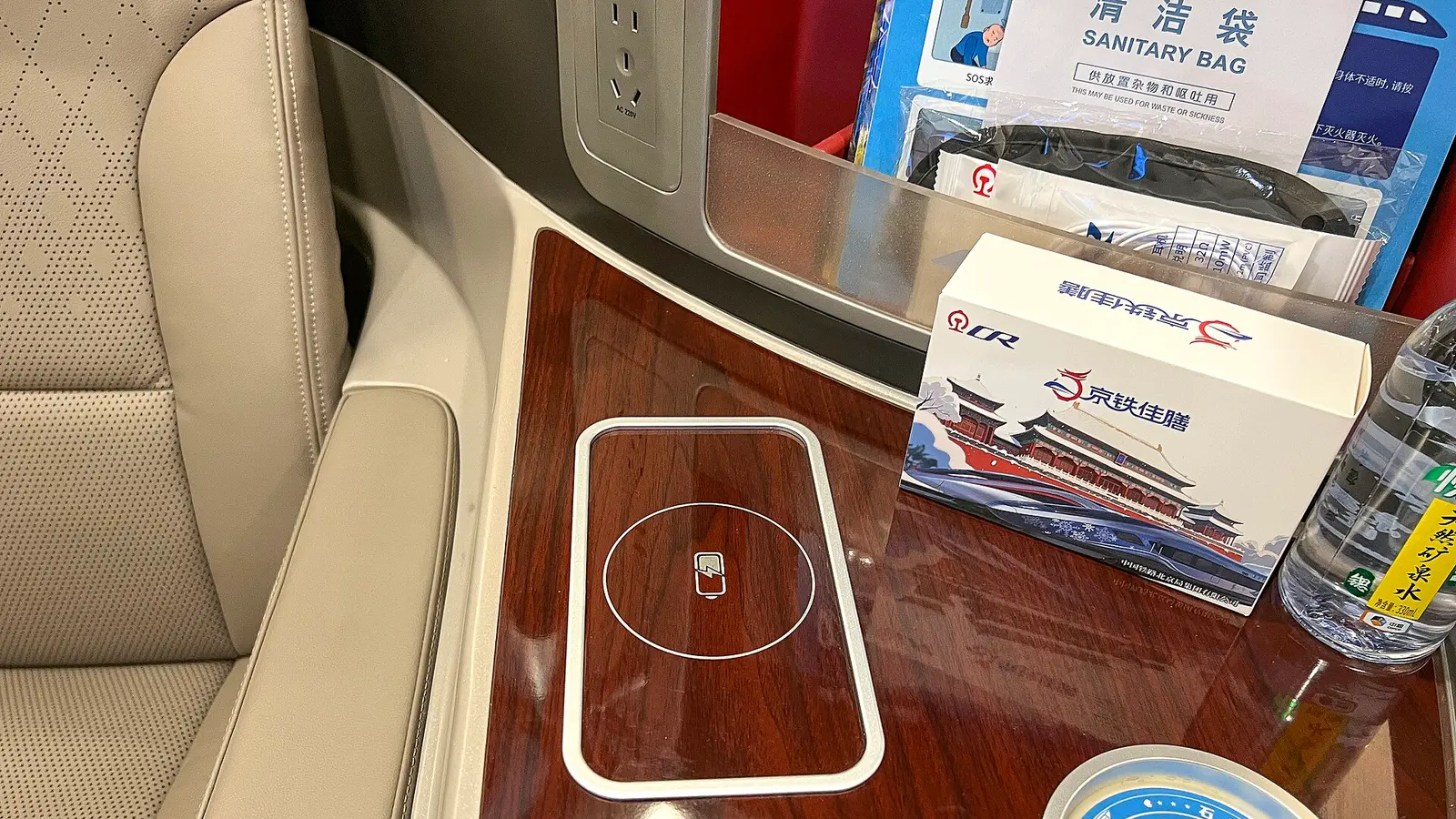
A wireless charger lamp is a desk or bedside light with a wireless charging transmitter built into its base or stand. For an OEM or promotional project, check three things before you approve a sample: the light must be comfortable, the charger must match the phones your buyers use, and the power and heat design must support both functions at the same time.
The product combines two heat sources
A lamp with charging is not just a lamp plus a charging pad. It puts an LED light source, an LED driver and a wireless power transmitter into one desktop product, so the buyer needs one specification that covers lighting, charging, power input, temperature and user instructions.
The Wireless Power Consortium says Qi wireless power transmitters can be integrated into products such as furniture, lamps, alarm clocks and speakers, and also mentions desktop lamps as stationary devices that can use wireless power. That matters for sourcing because the charger may not need a separate wall adapter in the way a standalone pad or stand often does; power can be routed internally from the lamp.
For a brand owner, importer, distributor or promotional-gift buyer, the right brief should say what the user gets, not only what the catalogue photo shows:
- A stable lamp head and base for desk use.
- A charging area that is easy to find without guessing.
- Clear phone alignment, especially if magnetic alignment is part of the design.
- A light output and colour appearance suitable for the target use.
- A power supply plan that supports charging while the lamp is on.
- A thermal result that stays acceptable during long use.
- Packaging and instructions that explain cases, metal objects and adapters.
If you are deciding between an existing design and a new custom version, define that early. For a made-to-order electronics project, Sunntc makes wireless chargers, USB cables and wireless charging power banks to order for brands, importers, distributors and promotional-gift buyers, with custom logos and packaging. The same OEM/ODM thinking applies here: start with the user scenario, then lock the electrical and cosmetic details. For a broader sourcing framework, see OEM and ODM options.
Charging standard and phone wattage
Qi is the Wireless Power Consortium standard for wireless power transfer. Qi2 added magnetic attachment for alignment and faster 15 W charging, and WPC says Qi v2.2.1, branded Qi2 25W, was launched in July 2025 to deliver higher charging power.
Do not judge the product only by the largest watt number on the box. The actual phone charging power depends on the charger design, the phone model, the adapter or internal power supply, alignment, case, temperature and the phone battery state.
Apple says its MagSafe Charger should be connected to a recommended 30 W or greater USB-C adapter for up to 25 W peak charging on listed newer iPhones, requiring 15 V, 2.0 A or higher. For iPhone 15 and earlier, Apple lists up to 15 W faster wireless charging with a 20 W or greater USB-C adapter at 9 V, 2.22 A or 9 V, 2.56 A or higher, while a 12 W adapter works more slowly.
Google lists Pixel Stand 2 wireless charging up to 23 W for some Pixel Pro models, 21 W for some models, 15 W for Pixel 9 and 15 W for other Qi-compatible devices. Google also says high-power charging requires a 30 W USB PD adapter that supports at least 14 V.
Samsung warns that incompatible or damaged charging accessories can cause slow charging, interruptions or failure. It also says that when device temperature becomes too high, charging may stop temporarily or charging speed may decrease.
| Claim | Meaning | Buyer check |
|---|---|---|
| Qi Certified | Lab tested | Database or certificate |
| Qi compatible | Not enough | Ask for evidence |
| Qi2 | Magnetic alignment | Confirm version |
| 25 W claim | Newer Qi2 level | Check phone and power |
WPC says Qi Certified products have passed independent laboratory tests for safety, interoperability and energy efficiency. It also warns that phrases such as Qi compliant, Qi compatible or Works with Qi suggest a product has not necessarily undergone proper Qi certification testing, and tells buyers to check the WPC product database or ask for a Qi Certificate of Registration.
Light quality belongs in the sample brief
The light side needs its own acceptance criteria. A desk lamp can charge well but still disappoint users if the light is harsh, uneven, too blue for a bedside product, too warm for office use, or difficult to dim.
Use plain lighting terms in your sample request. Lumen output describes brightness. CCT, or correlated color temperature, describes whether the light looks warm, neutral or cool. CRI, or color rendering index, is a common way to discuss how naturally colours appear under a light source. TM-30 is a newer colour rendition method; the Illuminating Engineering Society describes ANSI/IES TM-30-24+E1 as an approved method that quantifies average colour fidelity, gamut area and hue-specific properties using numerical and graphical techniques.
Dimming also needs to be tested with the charger running. A buyer should ask whether the LED driver and the wireless charging circuit remain stable when the lamp is at low, middle and high brightness. If the lamp has touch controls, memory settings or several colour modes, test charging in each mode because the user will not separate lighting from charging in daily use.
Add these lighting checks to the brief:
- Light appearance for the intended use, such as work desk, hotel bedside, office gift or student desk.
- Dimming range and whether dimming is stepped or continuous.
- Colour mode names used in the manual and on packaging.
- Glare from the LED head and reflections from the charging area.
- Stability of touch controls when a phone is placed on the base.
- Any visible flicker concern during dimming or low-light use.
- Whether the lamp can hold its angle while a phone is charging.
For promotional projects, the surface finish also affects perceived light quality. A glossy base can show fingerprints and reflections; a soft-touch or fabric area may look warmer but needs cleaning instructions. These are design choices, so confirm them with a physical sample rather than only a rendering.
Power input and shared load
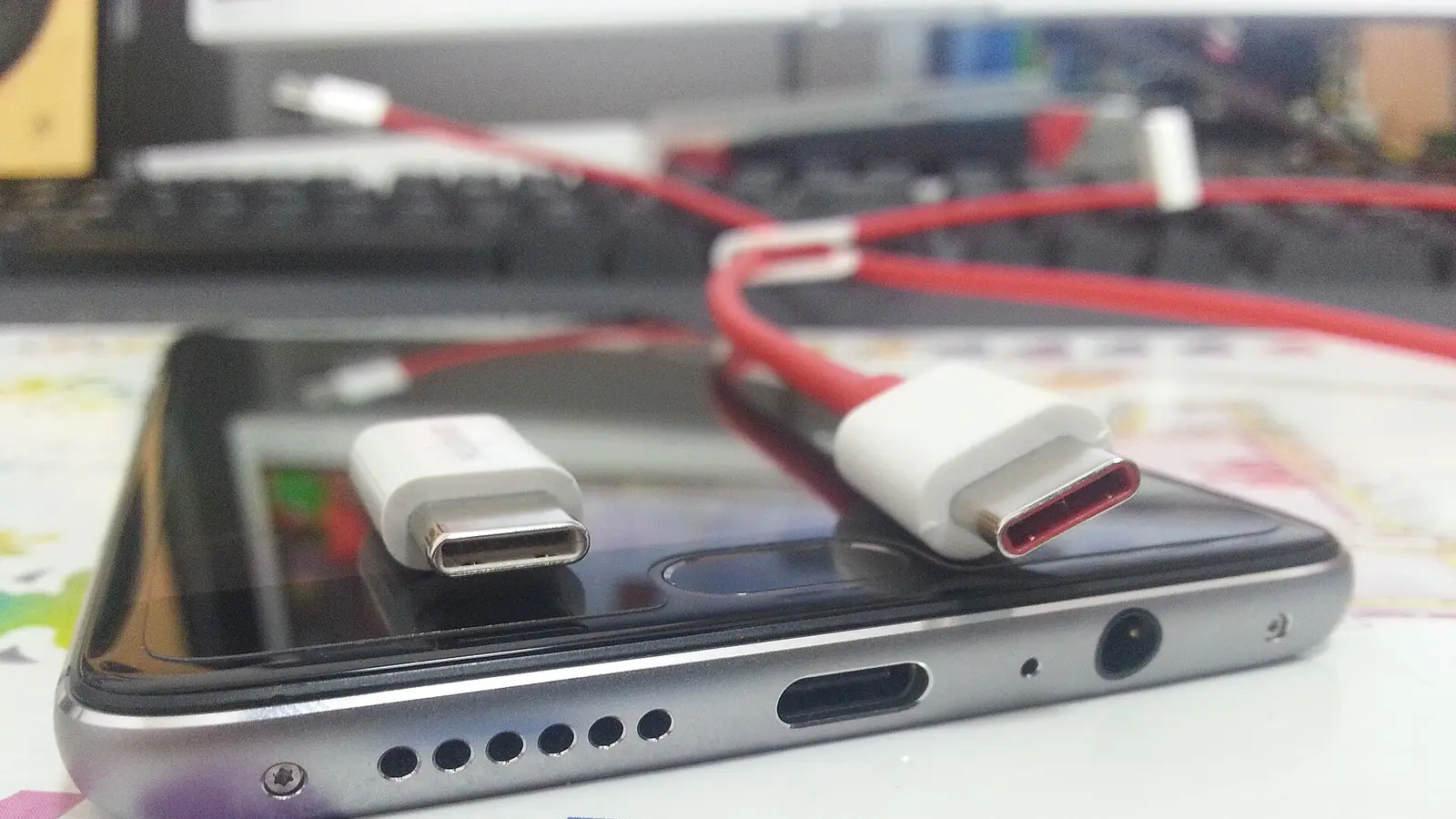
A charger lamp must feed the LED light and the wireless transmitter from the same power path unless the product has separate inputs. That is why the adapter or internal power supply is part of the product specification, not an accessory afterthought.
The Qi introduction notes that standalone pads, stands and power banks typically need a 5 V, 2 A adapter, while a transmitter built into a lamp can route power internally from the product instead of using a separate adapter. For a modern USB-C powered lamp, ask whether the input supports USB Power Delivery. USB Power Delivery is a negotiation method that lets a powered device request suitable voltage and current from a USB-C power source.
USB-IF says USB Power Delivery provides more flexible power over USB and, in Revision 3.1, can deliver up to 240 W over full-featured USB Type-C cables and connectors. It also lists higher fixed voltages of 28 V, 36 V and 48 V for 140 W, 180 W and 240 W levels, and notes that adjustable voltage supply mode lets a powered device request intermediate voltages. This does not mean a lamp needs those upper levels; it means the buyer should ask exactly which input profiles the sample requires and which adapter is included or recommended.
Your power brief should cover both normal use and weak-user behaviour:
- Lamp on while phone charging.
- Lamp at maximum brightness while phone charging.
- Phone repositioned several times on the charging area.
- A lower-power adapter used by mistake.
- Cable changed by the user.
- Charging resumed after the phone becomes warm.
- Any indicator behaviour when the power source is insufficient.
The instruction manual should say which adapter type is required if the adapter is not included. If the adapter is included, request its own safety and electrical documentation as part of the product file.
Heat, cases and daily safety
Wireless charging produces heat because power is transferred through magnetic fields rather than metal contacts. LEDs and their drivers also produce heat. In a combined product, poor separation or a weak power design can make the phone slow down, the base feel too warm, or the charging cycle become unstable.
WPC’s Qi thermal section says a power transmitter product must limit the top surface temperature of the thermal test receiver to no more than 12 °C above ambient after operating for 1 hour. It also recommends limiting the interface surface to no more than 5 °C above ambient while powering the test receiver for 1 hour. Ambient means the surrounding room temperature used during the test.
Do not allow coins, keys, metal plates or magnetic foreign objects between the phone and the charging area; Google warns that metallic or magnetic foreign objects can heat or prevent proper charging.
Phone cases are another common cause of inconsistent results. Google says cases up to 3 mm may work with Pixel Stand, but metal, batteries or attachments can slow or stop charging. For an OEM brief, do not simply write case friendly. State the case thickness and case types you want tested, and exclude metal parts in the user instructions unless the product design has been validated for them.
A practical heat and stability test for samples should include:
- Charge with the lamp off, then with the lamp on.
- Repeat at each light mode and dimming level.
- Test with a bare phone and with the target case type.
- Check whether the phone remains aligned after normal desk movement.
- Record whether charging pauses, restarts or slows.
- Touch-check the base, lamp arm and charging area after extended use.
- Confirm that warning labels and manual text match the final product.
If the product uses magnetic alignment, confirm the exact phone family and case style you are targeting. Magnetic alignment can improve positioning, but it does not remove the need for a correct power supply, clear instructions and thermal validation.
OEM and sample checks before approval
For bulk buying, the sample approval process should be more structured than a retail unboxing. A good approval set includes charging checks, light checks, cosmetic checks, packaging checks and document checks.
Start with the product definition:
- Target phone groups, such as iPhone, Samsung Galaxy or Pixel models.
- Qi or Qi2 claim and whether certification is required.
- Rated wireless output and conditions for reaching it.
- Adapter included, adapter excluded or internal power supply.
- USB-C input requirements and cable type.
- Lamp shape, arm movement and base footprint.
- Light modes, dimming method and control layout.
- Logo position, print method, colour and size.
- Shell colour, surface texture and material appearance.
- Gift-box, manual, barcode and carton artwork.
Then ask for evidence before you approve production:
- Qi Certificate of Registration or WPC database listing if Qi Certified is claimed.
- Charging test results for your target phone list.
- Thermal test photos or data for lamp-on and lamp-off use.
- Adapter documentation if an adapter is supplied.
- Destination-market electrical, EMC, material and labelling files as required by your importer role.
- Final instruction manual with adapter, case and metal-object warnings.
- Packaging files that match the final charging claims.
During sample testing, use phones that represent your real sales market. An iPhone result does not automatically describe a Pixel result, and a Pixel result does not automatically describe a Samsung result. Also test with the adapter and cable that will ship, or with the exact adapter specification you will recommend.
For design development, compare product formats in the multi-function wireless charger range and use the sample stage to narrow the brief. If you are ready to review a quotation or request a sample, send the charging standard, target phones, light requirements and packaging plan through the contact page.
Questions and answers
Is Qi compatible the same as Qi Certified?
Qi compatible is not the same as Qi Certified. WPC says Qi Certified products have passed independent laboratory tests for safety, interoperability and energy efficiency, and it warns that phrases such as Qi compliant, Qi compatible or Works with Qi suggest a product has not necessarily undergone proper Qi certification testing.
How many watts will my phone actually receive?
The phone receives the lower practical result of the charger design, the phone model, the power supply, alignment, case and temperature. Apple, Google and Samsung all show that adapters, device temperature and accessories can affect speed, so ask for sample test results with your target phones rather than relying only on the headline watt rating.
Does the lamp need a USB-C PD adapter?
It depends on the product design. USB Power Delivery can provide flexible power over USB-C, and some phones or charging modes require specific adapter capability, but an integrated lamp may route power internally. Ask the supplier to state the required input profiles and whether the adapter is included.
Will dimming affect charging speed?
It can if the power budget or electrical design is weak, because the lamp and charger share the same product environment. Test charging at each brightness level and colour mode, with the lamp off and on, before approving the sample.
Can users charge through a case?
Some cases may work, but case material and thickness matter. Google says cases up to 3 mm may work with Pixel Stand, while metal, batteries or attachments can slow or stop charging, so define the case types to test and explain restrictions in the manual.
What documents should an importer ask for?
Ask for charging test results, thermal evidence, adapter documentation if supplied, final manual and labelling files, packaging artwork, and a Qi Certificate of Registration or WPC database listing if Qi Certified is claimed. Also request the destination-market compliance files your importer role requires.
Sources
- Wireless Power Consortium: Qi Specification: Introduction, How Qi wireless power transfer works, Version 1.3
- Wireless Power Consortium: Qi Specification: Mechanical, Thermal, and User Interface, Version 1.3
- Wireless Power Consortium: Qi Wireless charging
- Wireless Power Consortium: Qi Certified Products
- USB Implementers Forum: USB Charger (USB Power Delivery)
- Apple: How to use your MagSafe Charger with iPhone
- Google: Charge your phone with a Pixel Stand
- Google: Safety & regulatory manual (Pixel Stand)
- Samsung: Samsung Galaxy device is not fast charging
- Illuminating Engineering Society: Technical Memorandum: IES Method for Evaluating Light Source Color Rendition
Written by the engineering team at Shenzhen Sunning Tension Industrial Co., Ltd., an OEM and ODM factory in Bao’an, Shenzhen making consumer electronics and supplying custom-branded gifts. Ask a question about your own specification →